Platelet-Rich Plasma: How It Works and When It Delivers
Dosing, Formulations, and Clinical Results for Knee Pain and Tendon Injuries
Sandra was 58 when her orthopedist offered her another round of hyaluronic acid injections. Three previous cycles had helped for a few months, then the knee pain returned. He mentioned an alternative: platelet-rich plasma. She had never heard of it. She did not know that the healing agent had been circulating in her own blood the entire time.
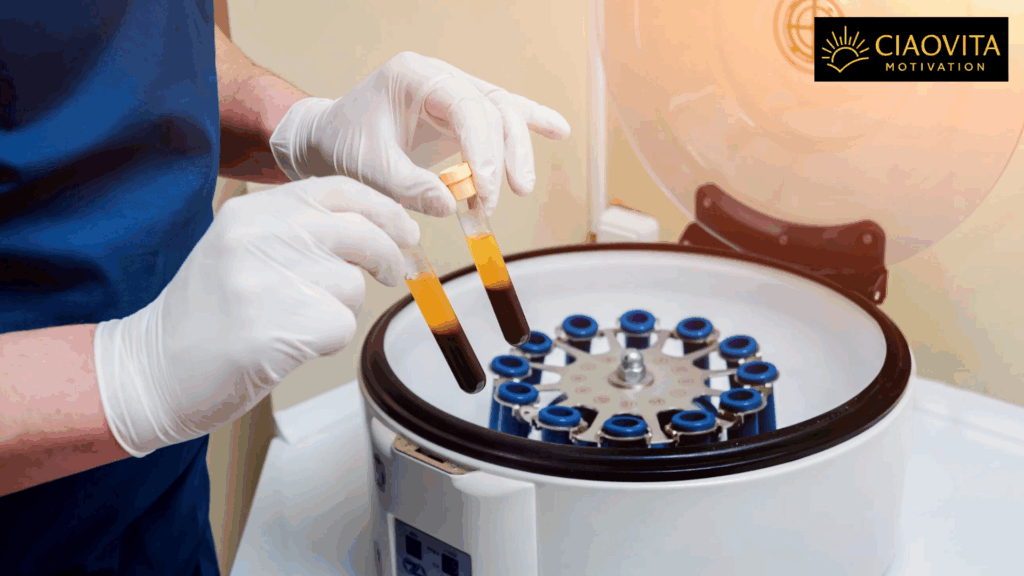
Platelet-rich plasma therapy is not a pharmaceutical product. It does not come from a laboratory or a pharmaceutical company. It comes from the patient. A blood sample is drawn, spun in a centrifuge to concentrate the platelets, then injected directly into the damaged tissue. The concept is simple. The biology behind it is considerably more complex, and the clinical results depend on details that most patients never hear about.
A 2024 umbrella review published in Annals of Saudi Medicine synthesized 28 meta-analyses covering 32,763 patients. The conclusion: platelet-rich plasma reduces pain and improves knee function better than hyaluronic acid and corticosteroid injections, with benefits sustained at 12 months. But whether a specific patient benefits depends critically on how the product is prepared, what dose is delivered, and which condition is being treated. Two products both labeled “PRP” can be biologically almost opposite.
How platelet-rich plasma works inside the body
Platelets are small cell fragments produced in bone marrow. Most people know them as clotting agents that stop bleeding. That is accurate but incomplete. Inside each platelet are structures called alpha granules, which store hundreds of biologically active molecules. When a platelet activates, it releases these molecules into the surrounding environment.
The most therapeutically important of these molecules are growth factors. Each plays a distinct role in tissue repair:
Key growth factors in platelet-rich plasma and their functions:
|
In healthy adults, normal platelet counts range from 150,000 to 350,000 per microliter of blood. For platelet-rich plasma to produce a therapeutic effect, the final product must reach at least 1,000,000 platelets per microliter. A 2020 review in the International Journal of Molecular Sciences established this as the minimum effective threshold. The optimal concentration for stimulating angiogenesis appears to be around 1.5 million per microliter. Above that level, the angiogenic effect may paradoxically decline.
One mechanism most patients never hear about: roughly 90% of the body’s total serotonin is stored in platelets, not in the brain. When platelets are concentrated and injected into tissue, a large serotonin surge arrives at the injection site. In peripheral tissue, serotonin regulates immune cell behavior, supports blood vessel formation, and modulates local pain signaling at nerve endings. This may explain why some patients report pain relief that lasts significantly longer than the platelets themselves remain at the site.
Preparation follows three steps: blood draw (typically 30 to 60 milliliters), centrifugation to separate components by density, and extraction of the platelet-rich layer. The entire process takes under an hour. The differences between devices and protocols at different clinics, however, produce dramatically different products. Two patients receiving what is called a “PRP injection” may receive products with entirely different biological characteristics.
LP-PRP vs LR-PRP: why formulation determines outcome
The most consequential distinction in platelet-rich plasma preparation involves white blood cell content. Preparations divide into two main categories: LR-PRP (leukocyte-rich) and LP-PRP (leukocyte-poor).
LR-PRP contains neutrophils and other white blood cells. Neutrophils are the immune system’s first-responder cells. They arrive quickly and release aggressive enzymes, including matrix metalloproteinases and reactive oxygen species, designed to combat infection. In a joint already inflamed by osteoarthritis, these same enzymes can worsen cartilage damage rather than support healing.
A 2023 meta-analysis published in Frontiers in Medicine compared the two formulations for intra-articular knee injections. LP-PRP produced significantly greater pain reduction than LR-PRP. The 2024 umbrella review of 32,763 patients confirmed this preference, specifying that leukocyte-poor formulations are superior for joint applications. This is now the emerging consensus in the field.
For tendon injuries, the picture is less clear. Some researchers argue that controlled inflammation from leukocytes may benefit tendon remodeling. Current evidence has not established a clear advantage for either formulation in tendinopathy. The debate remains open for extra-articular applications.
Activation method adds another variable. Some practitioners add calcium chloride or thrombin before injection to trigger immediate platelet degranulation. Others inject the product unactivated and allow natural activation when platelets contact collagen in the damaged tissue. Natural activation may provide more sustained growth factor release. Forced activation creates a faster but shorter burst. No clinical trial has yet demonstrated clear superiority for either approach.
Questions to ask before a platelet-rich plasma injection:
|
Dosing threshold: the number that separates success from failure
Dosing is the most underestimated variable in platelet-rich plasma treatment planning. A 2025 narrative review in the Journal of Clinical Medicine examined 40 high-quality studies and identified a specific threshold: protocols delivering more than 3.5 billion platelets per injection produce significantly better outcomes than those that fall below it.
An analysis by Berrigan and colleagues, included in the same review, examined 29 randomized trials on knee osteoarthritis. Among 31 treatment arms studied, 28 (90%) that delivered doses above 5.5 billion platelets reported clinically significant improvement. Treatment arms using doses below 2.3 billion platelets showed no benefit compared to placebo.
The optimal cumulative dose across multiple sessions is estimated at 10 billion total platelets. This is typically achieved with three to four injections delivered at two- to four-week intervals. Multiple-injection protocols consistently outperform single-injection approaches in the 2023 and 2025 meta-analyses. A single injection creates a temporary growth factor boost that fades as platelets degrade. Repeated treatments maintain higher concentrations of bioactive molecules in the joint over a sustained period.
The biological explanation for the dose threshold is straightforward. Growth factors released by platelets degrade within days to weeks in synovial fluid. An insufficient concentration fails to activate the cellular cascades needed for structural change. Above the therapeutic threshold, the tissue environment shifts in ways that persist beyond the immediate presence of the injected product.
Preparation system determines how close any given protocol can get to these thresholds. Single-spin centrifugation produces concentrations of 1.5 to 2 times baseline. Double-spin systems reach 3 to 5.5 times baseline. Most successful trial protocols used double-spin preparation.
Exercise before the blood draw: an overlooked variable
In 2022, a clinical study published in Arthroscopy: Sports Medicine and Rehabilitation tested an intervention so simple it is almost surprising no clinic had routinely adopted it: what happens if patients exercise before the blood draw?
Twenty healthy adults between ages 21 and 45 cycled on a stationary bike for 20 minutes at 70 to 85% of maximum target heart rate. Blood was drawn before and immediately after exercise, then processed through two different PRP systems. Platelet concentration in whole blood rose by more than 20% (p < 0.001). Both PRP products showed the same increase.
The mechanism is well established in exercise physiology. The human spleen holds approximately one-third of the body’s total platelet supply in what researchers call an “exchangeable pool.” During vigorous exercise, the sympathetic nervous system activates and releases adrenaline. This triggers adrenergic receptors in the spleen, causing the organ to physically contract and push its platelet reserves into systemic circulation.
The Callanan study found an additional benefit beyond platelet count. In the buffy coat processing system, the post-exercise PRP was larger in volume and contained more hematopoietic progenitor cells. Concentrations rose from 1.7 per microliter to 2.7 per microliter (p = 0.043). White blood cell counts increased across all subtypes. The exercise protocol produced a biologically richer product across multiple cell populations simultaneously, not just more platelets.
A 2025 study examining spleen volume during moderate-intensity aerobic exercise found that cardiorespiratory fitness, measured as peak VO2, predicted platelet mobilization better than resting spleen size. This suggests that people who exercise regularly mobilize platelets more efficiently during a pre-PRP workout than sedentary individuals.
The practical protocol is straightforward: 20 minutes of vigorous aerobic exercise at 70 to 85% of maximum heart rate on a stationary bike, rowing machine, or elliptical. Blood collection must happen immediately after the session ends, while platelet count is still at peak. Two hours later, platelets have redistributed and the advantage is gone.
Medication timing matters for a separate reason. Aspirin permanently inhibits platelet function by blocking cyclooxygenase, reducing growth factor content in the final PRP product. Fresh platelets with restored function take 5 to 7 days to replace the affected ones. NSAIDs like ibuprofen and naproxen cause a reversible version of the same effect, clearing within 24 to 48 hours. Anyone taking aspirin for cardiovascular protection should never stop without consulting their cardiologist first.
Clinical results: what works, what does not, and why
Knee osteoarthritis has the strongest evidence base of any platelet-rich plasma application. The 2024 umbrella review documented consistent improvements in pain and function scores at 6 and 12 months across 28 meta-analyses. Compared to hyaluronic acid, PRP reduces pain by an additional 15 to 20 points on a 100-point scale at one year. Compared to corticosteroids, short-term results are comparable, but PRP effects last significantly longer: steroids typically exhaust their benefit within 3 months, while PRP benefits extend beyond 12 months.
Patients who respond best have Kellgren-Lawrence grade I to III osteoarthritis (mild to moderate). Grade IV patients, with complete cartilage loss and bone-on-bone contact, show minimal improvement. Younger age, BMI under 30, and active synovial inflammation are associated with better responses. Prior treatments with hyaluronic acid, corticosteroids, or physical therapy do not significantly predict PRP response, because the mechanisms are distinct.
Lateral epicondylitis, commonly called tennis elbow, is the tendon condition with the strongest long-term PRP evidence. A 2024 meta-analysis of 11 randomized controlled trials found that while corticosteroids deliver faster relief in the first two months, PRP produces significantly better outcomes at 6 months and beyond. For patients seeking lasting resolution rather than temporary suppression, PRP is the more rational choice for this condition.
Gluteal tendinopathy showed consistent results in one trial: patients who received PRP reported significantly less pain and better function at 12 weeks compared to corticosteroid injections, and those benefits held for two years. The corticosteroid group improved initially, then declined after 6 weeks.
Achilles tendinopathy is where platelet-rich plasma fails most clearly. A May 2025 meta-analysis in Clinical Orthopaedics and Related Research analyzed 6 randomized trials with 422 patients. PRP showed no benefit over placebo at 3, 6, or 12 months. The authors’ conclusion is direct: until future high-quality trials demonstrate clear clinical benefit, PRP should not be recommended for Achilles tendinopathy.
Rotator cuff pathology divides sharply by treatment context. When PRP is added during arthroscopic rotator cuff repair surgery, 7 studies found no advantage over surgery alone. One trial found that PRP increased markers of cell death in tendon tissue after the procedure. When PRP is used as a non-surgical treatment for partial tears or chronic tendinopathy, 5 of 6 studies reported positive outcomes compared to corticosteroids at 6 months and beyond. The same treatment, opposite results, depending entirely on context.
Plantar fasciitis shows the most consistent results among tendon conditions. Two trials found PRP superior to both shockwave therapy and corticosteroid injections at one year. The mechanically stable environment of the plantar fascia may allow growth factors to work without constant disruption from dynamic loading.
Evidence summary by condition:
|
Conclusion
Platelet-rich plasma is not a uniform therapy. It is a family of products with different biological characteristics, applied to conditions that respond in very different ways. This is why the literature looks contradictory: the variation is not in the underlying principle but in preparation protocols and patient selection.
The current data support several concrete conclusions. For mild-to-moderate knee osteoarthritis, LP-PRP delivered across three or more injections at doses above 3.5 billion platelets produces results superior to standard care. For lateral epicondylitis and plantar fasciitis, long-term advantages over corticosteroids are well documented. For Achilles tendinopathy, PRP has not demonstrated benefit over placebo and should not be the first or second treatment offered.
Anyone evaluating this therapy for knee pain or a tendon condition has the right to specific information: what type of product will be prepared, what platelet concentration is expected, how many injections are included in the protocol, and what structured rehabilitation plan accompanies the treatment. PRP without concurrent physical therapy consistently underperforms PRP paired with progressive loading. Growth factors provide biological signals, but mechanical loading guided by physical therapy directs tissue remodeling toward functional recovery.
Cost remains a real barrier. Insurance coverage for PRP in knee osteoarthritis remains limited in the United States and unavailable through most European national health systems. A typical three-injection series runs between $1,500 and $6,000 out of pocket. That number needs to be weighed against the evidence: for the right patient and the right condition, the outcome data are strong enough to treat this as a serious clinical option, not an experimental one.
The 2.3 billion platelet minimum is a line in the evidence. Any protocol that stays below it is not underdosing PRP. It is using a product that clinical data consistently show to be inert for this indication. Patients asking about PRP deserve to know where that line is.
References
1. Belk JW, Lim JJ, Keeter C, McCulloch PC, Houck DA, McCarty EC, Frank RM, Kraeutler MJ. Patients With Knee Osteoarthritis Who Receive Platelet-Rich Plasma or Bone Marrow Aspirate Concentrate Injections Have Better Outcomes Than Patients Who Receive Hyaluronic Acid: Systematic Review and Meta-analysis. Arthroscopy. 2023;39(7):1714-1734.
2. Bastos R, Mathias M, Andrade R, Bastos R, Balduino A, Schott V, Rodeo S, Espregueira-Mendes J. Intra-articular injections of expanded mesenchymal stem cells with and without addition of platelet-rich plasma are safe and effective for knee osteoarthritis. Knee Surg Sports Traumatol Arthrosc. 2018.
3. Callanan MC, Plummer HA, Green TM, Opitz T, Broderick T, Rendos N, Anz AW. Exercise-mobilized platelet-rich plasma: short-term exercise increases stem cell and platelet concentrations in platelet-rich plasma. Arthrosc Sports Med Rehabil. 2022;4(3):e877-e882.
4. Barale C, Melchionda E, Tempesta G, Morotti A, Russo I. Impact of physical exercise on platelets: focus on its effects in metabolic chronic diseases. Antioxidants (Basel). 2023;12(8):1609.
5. Chamberlain KG, Tong M, Penington DG. Properties of the exchangeable splenic platelets released into the circulation during exercise-induced thrombocytosis. Am J Hematol. 1990;34(3):161-168.
6. Lin F, Zhang X, Cui C. Mesenchymal stem cells and platelet rich plasma therapy for knee osteoarthritis: an umbrella review of systematic reviews with meta-analysis. Ann Saudi Med. 2024;44(3):195-211.
7. Costa LAV, Lenza M, Irrgang JJ, Fu FH, Ferretti M. How Does Platelet-Rich Plasma Compare Clinically to Other Therapies in the Treatment of Knee Osteoarthritis? A Systematic Review and Meta-analysis. Am J Sports Med. 2023;51(4):1074-1086.
8. Bensa A, Previtali D, Sangiorgio A, Boffa A, Salerno M, Filardo G. PRP injections for the treatment of knee osteoarthritis: the improvement is clinically significant and influenced by platelet concentration. Am J Sports Med. 2025;53(5):779-790.
9. Barreto ESR, Antunes Junior CR, Silva IC, et al. Is platelet-rich plasma effective in treating Achilles tendinopathy? A meta-analysis of randomized clinical trials. Clin Orthop Relat Res. 2025;483(5):779-790.
10. Xu Y, Li T, Wang L, Yao L, Li J, Tang X. Platelet-Rich Plasma Has Better Results for Long-term Functional Improvement and Pain Relief for Lateral Epicondylitis. Am J Sports Med. 2024;52(10):2646-2656.
11. Everts PA, Onishi K, Jayaram P, Lana JF, Mautner K. Platelet-Rich Plasma: New Performance Understandings and Therapeutic Considerations in 2020. Int J Mol Sci. 2020;21(20):7794.
12. Andia I, Atilano L, Maffulli N. Moving toward targeting the right phenotype with the right platelet-rich plasma formulation for knee osteoarthritis. Ther Adv Musculoskelet Dis. 2021;13:1759720X211004336.
13. O’Dowd A. Update on the use of platelet-rich plasma injections in the management of musculoskeletal injuries. Orthop J Sports Med. 2022;10(12):23259671221140888.
14. Zarekar T, Hajifathali A, Ahmadizad S. The effect of high intensity interval exercise on platelet engraftment in autologous bone marrow transplantation. Int J Hematol Oncol Stem Cell Res. 2024;18(3):240-248.
15. Mende E, Love RJ, Young JL. A Comprehensive Summary of the Meta-Analyses and Systematic Reviews on Platelet-Rich Plasma Therapies for Knee Osteoarthritis. Mil Med. 2024;189(11-12):e2347-e2356.
© 2026 Alice & Marcus Guimarães. All rights reserved.This site is proudly created with WordPress.