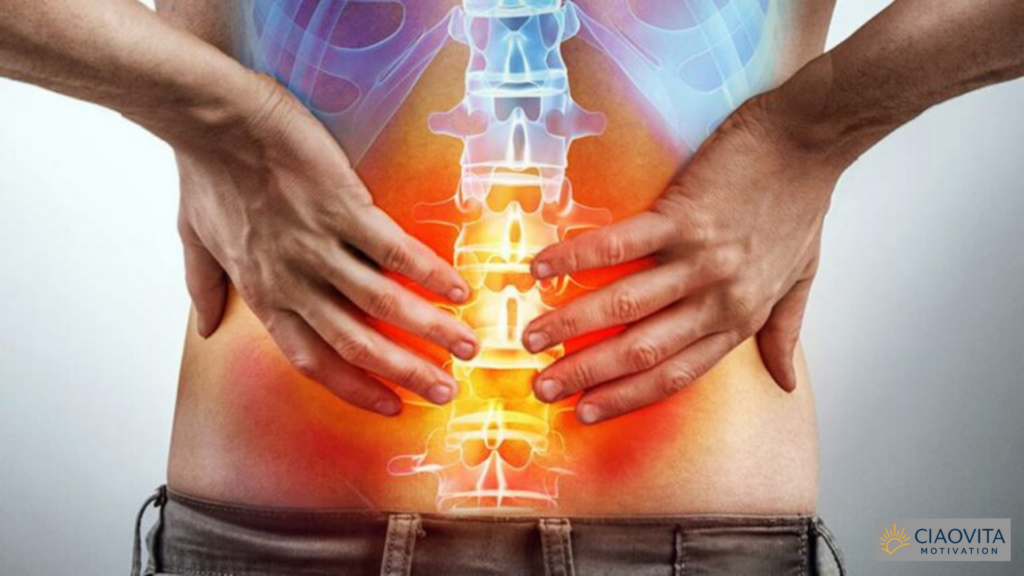
Muscle Control and Chronic Low Back Pain: The Hidden Connection
Understanding How Weak Multifidus Muscles and Tight Hamstrings Fuel Your Back Pain
Chronic low back pain affects millions of people worldwide, creating disability and severely impacting quality of life. While most people assume their pain comes from damaged discs or arthritic joints, research reveals a surprising truth. For many people with nonspecific chronic low back pain, the real problem lies in muscle control dysfunction. Your muscles have lost the ability to stabilize your spine properly, creating a cascade of compensatory movements that perpetuate pain.
Three groundbreaking studies examined the intricate connections between muscle function and chronic low back pain. Researchers measured hamstring flexibility, evaluated the lumbar multifidus muscle’s condition and analyzed how the nervous system controls spinal stability. Their findings paint a clear picture of how muscle dysfunction drives persistent back pain that resists traditional treatments. Understanding this connection offers hope for people whose pain has defied conventional approaches.
What is nonspecific chronic low back pain?
Chronic low back pain persists for at least three months and causes pain on more than half the days during a six-month period. The term nonspecific means doctors cannot identify a specific structural cause like a herniated disc, fracture, tumor or infection. Approximately 90 percent of chronic low back pain falls into this nonspecific category. These patients experience real pain and disability, but standard imaging tests reveal nothing obviously wrong.
Nonspecific chronic low back pain exists on a spectrum between primarily neuropathic pain and primarily nociceptive pain. Nociceptive pain arises from tissue damage and mechanical stress on joints and soft tissues. When your spine moves outside its normal range of motion due to instability, tissues become overloaded and injured, initiating pain signals. Many people with nonspecific chronic low back pain suffer from this mechanical type of pain caused by poor muscle control.
The spine stability system
Your spine relies on three interconnected subsystems for stability. First, the spinal column itself provides structural support through bones, discs and ligaments. Second, spinal muscles generate forces that control movement and maintain position. Third, the neural control unit in your brain and spinal cord coordinates everything, telling muscles when and how strongly to contract. These three systems must work together seamlessly to keep your spine stable and pain-free.
When one or more of these stabilizing mechanisms fails, spinal segments move outside their normal range of motion. Doctors call this area of normal movement the neutral zone. Movement beyond the neutral zone causes tissue injury and initiates low back pain. If your muscle control system cannot exert optimal stabilizing forces on the spinal column, joint and soft tissue overload becomes more likely. This overload creates primarily nociceptive pain that persists as long as the muscle dysfunction continues.
The lumbar multifidus muscle
Among all the muscles that stabilize your lumbar spine, the lumbar multifidus stands out as the most critical. This muscle’s unique architecture makes it perfectly designed for spinal control. The multifidus has three distinct layers of fascicles. Deep fascicles span only a single spinal segment and provide proprioceptive feedback about spine position. Intermediate fascicles control intersegmental movement between adjacent vertebrae. Superficial fascicles generate torque for larger movements.
Research demonstrates that the lumbar multifidus is the strongest stabilizer of the lumbar spine. The combined actions of the left and right multifidi account for more than two thirds of spine stiffness when in the neutral zone. This massive contribution to stability explains why multifidus dysfunction causes such significant problems. Without proper multifidus function, your spine lacks the stability needed for pain-free movement.
Studies consistently show that people with chronic low back pain exhibit multifidus changes. Many patients develop multifidus atrophy within days of new back pain onset. This atrophy appears on MRI scans and can occur unilaterally or bilaterally. Interestingly, bilateral atrophy frequently appears in patients complaining of unilateral pain. The severity of multifidus changes increases with symptom duration. Researchers have confirmed that the tissue replacing normal muscle is actually fat, not just fluid swelling.
Hamstring shortness and back pain
The hamstring muscles attach to your pelvic bone and participate in pelvic movement. Because the lumbar vertebrae sit adjacent to the pelvis, the lower back and pelvis cooperate to move in a functional manner. When hamstring muscles become shortened, they limit pelvic movement during functional activities. This limitation forces the lower back to move more than it should, changing mechanical forces and causing excessive stress that generates pain.
A study of 60 patients with nonspecific chronic low back pain examined the association between hamstring shortness, hamstring asymmetry, pain intensity, disability index and compensatory lumbar movement. Researchers used the active knee extension test to measure hamstring length in each leg. They assessed pain using a numeric pain rating scale and measured disability with the Oswestry Disability Index. To evaluate compensatory movement, they used a digital dual inclinometer to measure lumbar flexion and rotation during hip extension movements.
The results revealed striking correlations. Hamstring length showed a negative correlation with hamstring asymmetry, pain intensity and disability index. This means shorter hamstrings associated with higher pain and greater disability. Additionally, hamstring length positively correlated with lumbar flexion. People with tighter hamstrings exhibited less lumbar flexion during movements, forcing compensatory patterns.
Even more significantly, left-right asymmetry of hamstring length positively correlated with pain intensity, disability index and compensatory lumbar rotation. Greater asymmetry predicted worse outcomes across all measures. The asymmetry created imbalanced forces on the spine, leading to abnormal rotational movements that increased mechanical stress in the lumbar region. These compensatory movements likely contribute to persistent pain by repeatedly overloading spinal tissues.
Arthrogenic muscle inhibition
The mechanism linking pain to muscle dysfunction involves a phenomenon called arthrogenic muscle inhibition. This process can be readily observed in the quadriceps muscle after knee injury. Pain in a skeletal joint leads to reduced neural drive to the muscles that move or stabilize that joint. The change occurs because pain alters the discharge patterns of sensory receptors in the joint. Factors like swelling, inflammation, joint laxity and damage to joint nerve endings trigger this protective response.
Spinal reflex pathways contribute to arthrogenic inhibition, as demonstrated by changes in reflex activity during experimental studies. Evidence suggests that brain pathways also play an important role. Interestingly, arthrogenic inhibition can selectively affect different types of muscle fibers, or it can affect both type I and type II fibers together.
Research in humans and animal models confirms that induced local injury to the spine compromises neural drive to the lumbar multifidus. Scientists observe changes in electrical activity on multifidus electromyography after experimental disc degeneration or other spinal injuries. In animal studies, the multifidus becomes stiffer in response to disc degeneration and this stiffened muscle alters the biomechanical properties of the spine stabilizing system.
Induced pain studies in human volunteers demonstrate that experimental pain applied to spinal structures reduces neural drive to the adjacent multifidus. Functional MRI and ultrasound imaging reveal this reduced activation. Studies of populations with acute or chronic low back pain show altered recruitment patterns of the multifidus due to pain, pain avoidance and deconditioning. The research makes clear that pain itself disrupts the motor control system, creating a self-perpetuating cycle.
Brain changes in chronic pain
Chronic low back pain associates with significant cortical changes in the brain. Impaired motor control of the multifidus in patients with chronic low back pain relates to changes in cortical representation of the muscle and subsequent ability to exert voluntary control. Evidence shows reorganization of trunk muscle representation in the motor cortex of individuals with recurrent low back pain. This reorganization associates with deficits in postural control.
Individual fascicles of the multifidus are activated by different regions in the motor cortex. Motor control training for back pain patients can reverse some of the cortical reorganization. Research techniques using transcranial magnetic stimulation and surface electromyography allow assessment of cortical remodeling. The magnitude of cortical remodeling associates with the severity and location of low back pain.
Reduction in back pain resulting from medical interventions has been shown to restore more normal brain anatomy and function. This bidirectional relationship between pain and brain organization suggests that effective treatment must address both the pain itself and the underlying motor control dysfunction. Simply masking pain with medication does not restore proper muscle function or reverse the neuroplastic changes that maintain the problem.
Diagnostic challenges
Since disruption of the multifidus clearly associates with chronic low back pain in many cases, identifying patients with this particular pathology would seem logical. Unfortunately, imaging assessment of motor control dysfunction has limited diagnostic value in individual patients. Although MRI reliably shows multifidus atrophy and fat infiltration, these changes can result from any cause of back pain, not just motor control problems. The severity of fat infiltration shows some correlation with decreased range of motion and may predict continued chronic low back pain, but the diagnostic utility remains unclear for individual treatment decisions.
Ultrasound imaging can document reduced multifidus muscle mass and activation, but research shows that ultrasound measured multifidus activation does not predict which chronic low back pain patients will benefit from stabilization exercises. Electromyography has been used to show changes in multifidus recruitment in populations of patients with chronic low back pain, but EMG has not been shown useful as a diagnostic tool for individual patients.
Physical diagnostic tests show more promise. The prone instability test demonstrates adequate reliability and has been validated against multifidus function. The test is performed with the patient prone in a relaxed posture. The examiner applies pressure over each lumbar segment. If pressure produces pain, the test is repeated while the patient activates posterior spinal muscles by lifting the feet off the floor. If pain decreases significantly during muscle activation, the test is positive and suggests motor control deficit including multifidus dysfunction.
Exercise interventions
For some patients, restoration of motor control to the multifidus with specific exercises can be effective. Targeted motor control training focusing on the atrophied multifidus can override the normally involuntary control system, restore neural drive, and lead to recovery from back pain. Ultrasound image guided biofeedback helps patients learn to voluntarily contract a muscle not normally subject to voluntary control.
This therapy can result in improvements in pain and function in people with chronic low back pain, including athletes and people with chronic pain related to spondylosis and spondylolisthesis. Targeted motor control training can reduce long-term recurrence of back pain in patients with multifidus atrophy and reduce the severity of recurrences that do occur. The presence of reduced multifidus activation is a strong predictor of success with specific targeted training exercises.
Unfortunately, targeted multifidus exercises are difficult to perform and teach. Many patients simply cannot voluntarily contract a muscle group not normally amenable to voluntary control. Back pain induced arthrogenic inhibition may prohibit voluntary contraction of the multifidus. Research shows that population results for motor control exercises are mixed because most patients are unable to effectively activate their multifidus despite instruction and biofeedback.
Emerging treatments
The same principle that works for restoring quadriceps control after knee surgery may apply to the spine. Neuromuscular electrical stimulation to cause episodic quadriceps contractions has been used successfully to restore motor control and allow voluntary contractions following total knee replacement or other surgical procedures. This treatment works before improvements in muscle strength occur, demonstrating that the benefit comes from restoring neural control rather than simply building bigger muscles.
Researchers hypothesized that targeted electrical stimulation to cause episodic contraction of the multifidus alone could lead to restoration of neuromuscular control of this critical stabilizing muscle. While transcutaneous stimulation cannot selectively activate the deep multifidus without also activating overlying muscles, stimulation of electrodes placed adjacent to the nerve supply to the multifidus can cause multifidus-only contractions.
Direct stimulation of motor nerves requires two orders of magnitude lower energy than direct muscle stimulation. Furthermore, direct electrical stimulation of motor nerves leads to contraction of the whole muscle innervated by that nerve, not just the region near the electrodes. An implantable neurostimulator designed specifically for this purpose has been developed and tested in clinical trials with encouraging results. This approach, called restorative neurostimulation, promises a new treatment option for patients whose pain has not responded to conventional therapies.
Conclusion
Research makes clear that a significant number of people with primarily nociceptive chronic low back pain have impaired neuromuscular control of key stabilizing muscles as the root cause of their pain, especially impaired control of the lumbar multifidus and shortened hamstring muscles. The relationship between hamstring tightness, left-right asymmetry, pain intensity, disability, and compensatory lumbar movements reveals how muscle dysfunction perpetuates the pain cycle.
Arthrogenic muscle inhibition disrupts the motor control system, leading to multifidus atrophy and neuroplastic brain changes that maintain the dysfunction even after initial tissue healing. These patients are generally not candidates for surgery and are poorly served by existing therapies focused solely on pain management. Understanding the connection between muscle control and chronic low back pain opens new treatment possibilities. Exercise therapy targeting restoration of multifidus control helps some patients, but many find it impossible to voluntarily activate the affected muscles.
Emerging treatments like restorative neurostimulation offer hope for patients who have not found relief through conventional approaches. By directly stimulating the nerves that control the multifidus, these therapies may restore the motor control needed for lasting pain relief. As research continues to unravel the complex relationships between pain, muscle function, and neural control, treatment strategies will become increasingly sophisticated and effective.
References
- Moon KY, Park DC, Kim WD, Shin D. Association between hamstring shortness and asymmetry, pain intensity, disability index, and compensatory lumbar movement in 60 patients with nonspecific chronic low back pain. Med Sci Monit. 2023;29:e939657.
- Kim WD, Shin D. Correlations between hip extension range of motion, hip extension asymmetry, and compensatory lumbar movement in patients with nonspecific chronic low back pain. Med Sci Monit. 2020;26:e925080.
- Russo M, Deckers K, Eldabe S, Kiesel K, Gilligan C, Vieceli J, Crosby P. Muscle control and non-specific chronic low back pain. Neuromodulation. 2018;21:1-9.
© 2025 Alice & Marcus Guimarães. All rights reserved.This site is proudly created with WordPress.