Mediterranean Diet and Heart Health: The Complete Science-Backed Guide
Cardiovascular Protection, Blood Vessel Function and Longevity Through Nutrition
Cardiovascular disease kills approximately 655,000 Americans each year. Most people know the obvious risk factors; high cholesterol, high blood pressure, smoking, sedentary lifestyle. What fewer people understand is that the first measurable damage happens years before any symptom appears, inside the thin cellular lining of blood vessels called the endothelium. By the time a doctor spots a problem on a standard blood panel, arterial dysfunction may already be well underway.
The Mediterranean Diet addresses this hidden dimension of cardiovascular health. Research across more than 700,000 participants confirms it protects the heart through five distinct mechanisms simultaneously: reduced inflammation, improved blood vessel function, gut microbiome changes, shifts in gene expression and measurable reductions in cholesterol and blood pressure. No single pharmaceutical agent achieves all five at once.
Both the American Heart Association and the European Society of Cardiology include this eating pattern in their prevention guidelines. The evidence comes from observational studies following people for up to 14 years and randomized controlled trials where researchers directly tested dietary interventions. The consistency across study designs is rare in nutrition science and it tells a clear story.
What the Mediterranean Diet actually is
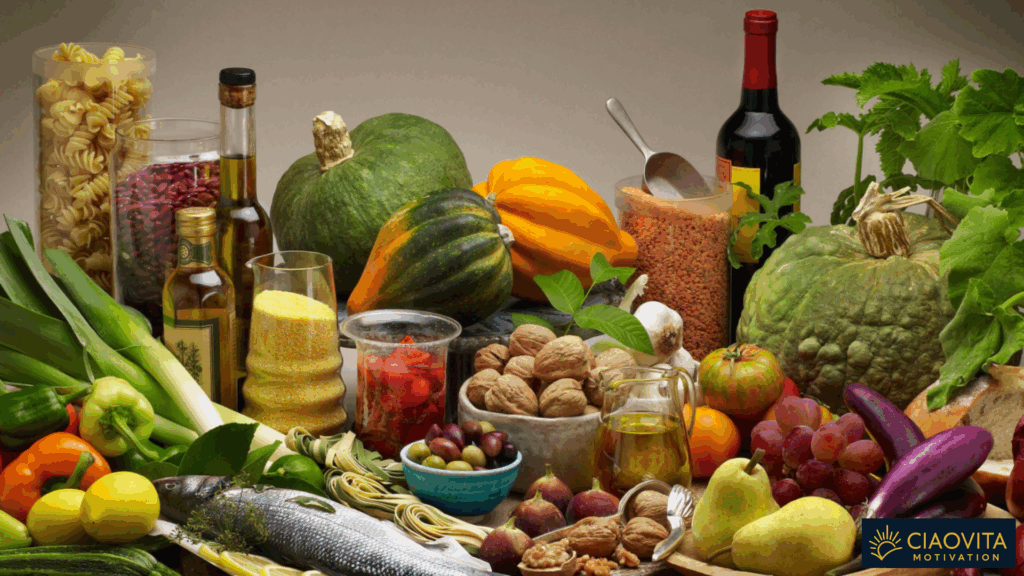
The Mediterranean Diet developed from the traditional eating habits of people living in Greece, Spain, Italy and neighboring countries. It is not a rigid meal plan. It is a food pattern built on specific proportions, heavy on plant foods, moderate on fish and poultry, light on red meat.
The core foods eaten regularly:
- Extra-virgin olive oil as the primary fat source, replacing butter and seed oils
- Vegetables and fruits consumed daily in large amounts
- Whole grains (brown rice, whole wheat bread, oats) instead of refined versions
- Legumes (beans, lentils, chickpeas) several times per week
- Nuts and seeds as everyday snacks
- Fish and seafood two to three times per week
Foods eaten rarely or occasionally:
- Red meat: consumed only a few times per month
- Processed foods, refined sugars and industrial seed oils
- High-fat dairy and butter
Researchers measure adherence using standardized scoring systems that evaluate how closely someone’s eating habits match this traditional pattern. Higher scores consistently correlate with better health outcomes across dozens of studies.
KEY DATA POINT: A 2023 systematic review in Nutrients analyzed 28 studies involving 679,000+ participants. High adherence to the Mediterranean Diet reduced all-cause mortality by 23% and cardiovascular mortality by 27%, with consistent results across Europe, North America, and Asia. |
How atherosclerosis develops and why this diet interrupts it
Most heart attacks and strokes trace back to atherosclerosis, the gradual accumulation of plaque inside artery walls. The process starts when LDL cholesterol particles penetrate the inner lining of an artery. Once inside, these particles oxidize, essentially going rancid. The immune system responds by sending white blood cells to contain the damage. Those cells consume the oxidized cholesterol but become bloated with fat, forming structures called foam cells.
Foam cells accumulate into plaque that narrows the artery and restricts blood flow. This unfolds silently over years. Most people feel nothing until blockage becomes severe enough to cause a heart attack or stroke. People with type 2 diabetes face double the cardiovascular event rate of non-diabetics because high blood sugar accelerates this entire process.
The Mediterranean Diet interrupts atherosclerosis at multiple steps:
- Polyphenols from olive oil and plant foods reduce LDL oxidation directly
- Omega-3 fatty acids from fish lower inflammation, a core driver of plaque formation
- Fiber from legumes and whole grains binds cholesterol in the gut, reducing absorption
- Antioxidants from fruits and vegetables protect endothelial cells from oxidative damage
Each mechanism reinforces the others. Reducing oxidative stress allows anti-inflammatory compounds to work more efficiently. Better cholesterol metabolism reduces the raw material available for plaque formation.
Blood vessel function: the clearest measure of cardiovascular risk
Cholesterol numbers are useful but incomplete. A more direct measurement of cardiovascular risk is endothelial function — specifically, how well blood vessels respond to changes in blood flow. This is measured using flow-mediated dilation (FMD), a technique that temporarily restricts blood flow to the arm with a pressure cuff, then releases it. Healthy vessels dilate quickly when blood flow returns. Damaged vessels barely respond.
FMD impairment predicts cardiovascular events years before symptoms appear. It is an early warning system that standard blood tests miss entirely.
STUDY RESULT: A 2020 meta-analysis published in The Journal of Nutrition examined 14 randomized controlled trials involving 1,930 participants. People following the Mediterranean Diet improved their FMD by 1.66%. Based on established cardiovascular research, this translates to approximately 18% lower cardiovascular disease risk — a level of improvement comparable to some prescription medications. |
The mechanisms behind this improvement are specific. Omega-3 polyunsaturated fatty acids from fish enhance the production of nitric oxide, the key molecule that signals blood vessels to relax. Vegetables provide dietary nitrates that convert to nitric oxide through an alternative pathway, ensuring continuous production even when the primary pathway is compromised. Polyphenols from olive oil reduce oxidative stress via the Nrf2-ARE pathway, protecting endothelial cells from damage that would otherwise make vessels stiff and unresponsive.
Studies using carotid intima-media thickness (CIMT), an ultrasound measure of artery wall thickness, found the Mediterranean Diet either reduced this measurement or slowed its progression compared to control diets. Coronary artery calcium scoring, which detects calcification inside heart arteries using CT scans, showed lower scores among people with higher dietary adherence. One study found this association strongest in adults aged 40 to 54, suggesting early adoption may prevent plaque before it becomes severe.
The PREDIMED trial and the mortality evidence
The landmark PREDIMED trial enrolled 7,447 participants at high cardiovascular risk. Researchers randomly assigned them to one of three groups: Mediterranean Diet supplemented with extra-virgin olive oil, Mediterranean Diet supplemented with mixed nuts, or a low-fat control diet. After an average of nearly five years, the Mediterranean Diet groups recorded a 29% reduction in major cardiovascular events, heart attacks, strokes and cardiovascular deaths combined.
These results match or exceed the benefits documented for aspirin, statins, and blood pressure medications in comparable populations, with no documented negative side effects and significant benefits beyond cardiovascular health.
The PREDIMED trial also documented measurable reductions in both systolic and diastolic blood pressure after one year, with improvements sustained over the five-year follow-up period. Total cholesterol, LDL cholesterol, and triglycerides all declined. These changes unfolded through consistent daily food choices, not pharmaceutical intervention.
For all-cause mortality, the evidence is equally consistent. A systematic review examining data from nearly 160,000 participants found that high adherence to the Mediterranean Diet reduces overall mortality risk by 23%. A separate prospective study found that men following this lifestyle lived 8.4 years longer than non-adherents, while women gained 15.1 additional years of survival.
The protection extends to older adults. Research specifically examining people over 60 found a significant mortality reduction with higher dietary adherence. Even in adults over 70, the protective effect persists (an 18% reduction in all-cause mortality risk) though the number of studies in this age group remains smaller, making specific cardiovascular event data less statistically certain.
Gut microbiome, gene expression and the deeper biology
Two research directions are expanding our understanding of how the Mediterranean Diet works beyond conventional nutrition mechanisms.
The gut microbiome connection
Research published in Nature Medicine found that long-term adherence to a Mediterranean-style eating pattern is associated with specific changes in gut bacteria composition. The diet promotes growth of fiber-degrading bacteria (particularly Faecalibacterium prausnitzii and Bacteroides cellulosilyticus) that produce short-chain fatty acids including butyrate, acetate, and propionate. These compounds reduce systemic inflammation and improve endothelial function through pathways that extend well beyond the digestive system.
A 2024 umbrella review analyzing 238 randomized controlled trials confirmed that the cardiovascular protection of the Mediterranean Diet was significantly stronger in participants with lower abundances of Prevotella copri, a specific gut bacterium. This points toward a future where dietary recommendations could be personalized based on microbiome profiling — though current evidence already supports broad adoption regardless of individual microbiome composition.
Gene expression changes
The Mediterranean Diet does not alter DNA. But it does influence which genes get activated or suppressed — a field called epigenetics. Studies examining participants following this eating pattern documented reduced expression of genes coding for nuclear factor kappa B (NF-κB), a protein that triggers systemic inflammatory responses. The diet also influenced genes regulating nitric oxide production in blood vessel walls, improving how arteries respond to changes in blood flow throughout the day.
Research published in the International Journal of Hypertension in 2025 identified seven distinct arterial hypertension pathways influenced by Mediterranean Diet components: hypoxia response, nitric oxide signaling, eNOS activation, P2Y purinergic receptor function, cardiac hypertrophic signaling, aldosterone regulation and renin-angiotensin modulation. No single medication targets all seven simultaneously.
Beyond the cardiovascular system, Mediterranean Diet adherence is associated with reduced risk of type 2 diabetes, slower cognitive decline, lower rates of depression, and decreased incidence of certain cancers. The anti-inflammatory and antioxidative mechanisms that protect blood vessels appear to support brain health, metabolic function, and immune regulation through overlapping pathways.
Practical implementation: how to start today
The Mediterranean Diet does not require calorie counting or eliminating food groups. It shifts proportions — more plants, more fish, more olive oil; less red meat, less processed food. Most people can implement meaningful changes within a week.
Practical starting steps, in order of impact:
- Replace butter and seed oils with extra-virgin olive oil for all cooking and dressings. Use it generously — the polyphenols require adequate intake to produce measurable effects.
- Add fish to two or three dinners per week. Fatty fish (salmon, mackerel, sardines, anchovies) deliver the highest omega-3 concentrations. Any fish contributes to the overall pattern.
- Fill half your plate with vegetables at every main meal. Aim for variety in color, which correlates with variety in protective compounds.
- Replace white bread, white rice, and regular pasta with whole grain versions. The fiber content changes how quickly carbohydrates enter the bloodstream and feeds beneficial gut bacteria.
- Include legumes (beans, lentils, chickpeas) at least three times per week. They work equally well in soups, salads, or as a side dish replacing red meat.
- Snack on a small handful of nuts (almonds, walnuts, or pistachios) instead of processed foods. Walnuts deliver the highest plant-based omega-3 content.
- Reduce red meat to a few times per month. When you do eat it, treat it as a side rather than the center of the plate.
Consistency matters more than perfection. Research consistently shows that even moderate adherence produces measurable cardiovascular benefits. Missing the mark at one meal is irrelevant over the long arc of a sustained eating pattern. Mediterranean Diet studies running from one month to 30 months all showed improvement, with longer adherence producing greater vascular protection.
One practical framing: think of each meal as either moving toward or away from the pattern. A meal built around vegetables, legumes, olive oil, and fish moves toward it. A meal centered on processed meat, refined carbohydrates, and butter moves away. Over time, accumulating more meals in the first category produces the outcomes documented in the research.
IMPORTANT: The full protective effect comes from the complete pattern, not isolated components. Eating olive oil while maintaining a high intake of processed foods and red meat does not replicate the trial results. The synergy between components is central to how this eating pattern produces benefits that exceed single-nutrient or single-food interventions. |
What the evidence adds up to
The Mediterranean Diet is the most studied eating pattern in nutritional science. Across more than 700,000 participants, multiple research designs, and populations on several continents, the findings point in the same direction: this eating pattern protects the cardiovascular system through mechanisms that begin at the cellular level and extend to measurable clinical outcomes.
Flow-mediated dilation improves by 1.66% — translating to 18% less cardiovascular disease risk. Major cardiovascular events drop by 29% in high-risk populations following the PREDIMED protocol. All-cause mortality falls 23% with high adherence. Cardiovascular mortality falls 27%. Adults over 70 record an 18% reduction in death risk. These numbers come from different studies, different populations, and different designs and they are consistent.
For anyone asking what they can control about their cardiovascular future, the Mediterranean Diet is the most evidence-backed answer available. A 2025 Italian national guideline synthesis encompassing 84 evidence-based recommendations confirmed its role in both primary prevention for the general population and secondary prevention for high-risk individuals.
Start with olive oil instead of butter. Add fish twice this week. Put legumes on the table tonight. These are not dietary sacrifices, they are the daily foundation of the most cardiovascular-protective eating pattern science has identified.
References
1. Laffond A, Rivera-Picón C, Rodríguez-Muñoz PM, et al. Mediterranean Diet for Primary and Secondary Prevention of Cardiovascular Disease and Mortality: An Updated Systematic Review. Nutrients. 2023;15(15):3356.
2. Furbatto M, Lelli D, Antonelli Incalzi R, Pedone C. Mediterranean Diet in Older Adults: Cardiovascular Outcomes and Mortality — A Systematic Review and Meta-Analysis. Nutrients. 2024;16(22):3947.
3. Shannon OM, Mendes I, Köchl C, et al. Mediterranean Diet Increases Endothelial Function in Adults: A Systematic Review and Meta-Analysis of Randomized Controlled Trials. J Nutr. 2020;150(5):1151-59.
4. Hareer LW, Lau YY, Mole F, et al. The effectiveness of the Mediterranean Diet for primary and secondary prevention of cardiovascular disease: An umbrella review. Nutr Diet. 2025;82(1):8-41.
5. Sebastian SA, Padda I, Johal G. Long-term impact of Mediterranean diet on cardiovascular disease prevention: A systematic review and meta-analysis of randomized controlled trials. Mayo Clin Proc. 2024;99(4):512-28.
6. Liweleya Y, Maranata GF, Ginting CN. Mediterranean Diet as a Therapeutic Strategy for Hypertension and Cardiovascular Health. Int J Hypertens. 2025;2025:2369674.
7. Wang DD, Nguyen LH, Li Y, et al. The gut microbiome modulates the protective association between a Mediterranean diet and cardiometabolic disease risk. Nat Med. 2021;27(2):333-43.
8. Estruch R, Ros E, Salas-Salvadó J, et al. Primary Prevention of Cardiovascular Disease with a Mediterranean Diet Supplemented with Extra-Virgin Olive Oil or Nuts (PREDIMED). N Engl J Med. 2018;378(25):e34.
9. Godos J, Guglielmetti M, Ferraris C, et al. Mediterranean Diet and Quality of Life in Adults: A Systematic Review. Nutrients. 2025;17(3):577.
10. Dominguez LJ, Di Bella G, Veronese N, Barbagallo M. Impact of Mediterranean Diet on Chronic Non-Communicable Diseases and Longevity. Nutrients. 2021;13(6):2028.
© 2026 Alice & Marcus Guimarães. All rights reserved.This site is proudly created with WordPress.