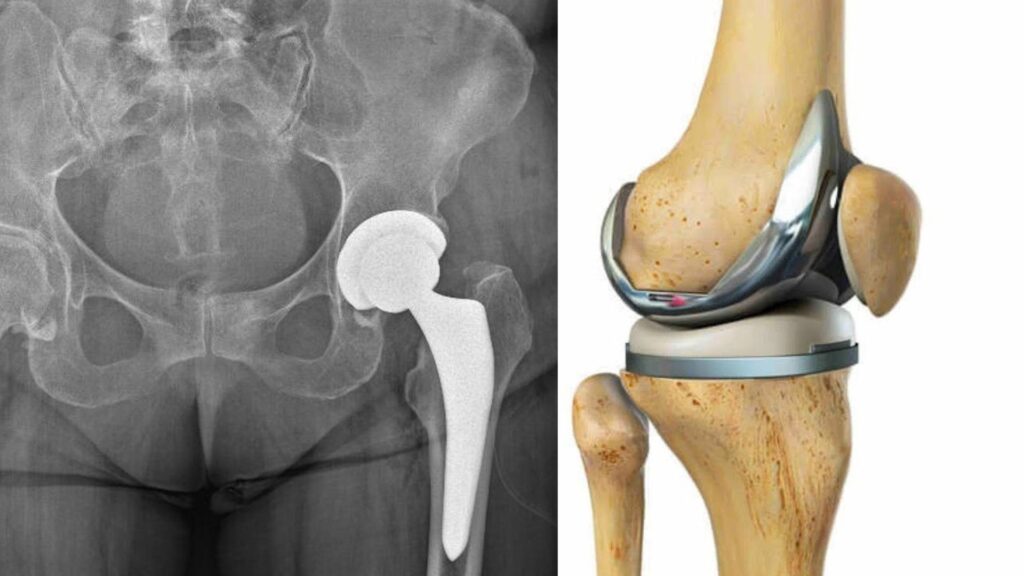
Three weeks after her knee replacement, a patient called me on a Sunday evening. Her knee was warm, red and more swollen than the day before. She had a slight fever. She asked one question: “Is this normal?”
It wasn’t. It was an early infection. We operated within 48 hours, cleaned the joint, changed the plastic insert and kept her original implant. A year later she was walking without pain. That outcome depended almost entirely on how fast she called.
In my previous article I wrote about how long a joint replacement lasts. Most implants last a very long time. This article covers the other side. It looks at what can go wrong and how often, then at how surgeons treat each problem and how patients do afterwards.
I’ve built it on systematic reviews, meta-analyses and one large randomized trial. Together, these studies include several million operations. Some of the numbers are reassuring. A few are uncomfortable. You deserve both.
How often things go wrong after joint replacement
The first thing to understand is scale. Serious complications are uncommon. Each one, taken alone, affects a few patients in a hundred or fewer.
Here are the main complications and their frequency, according to the best evidence I found:
- Stiffness after knee replacement: about 4% of patients, in a meta-analysis of 48,873 knees (Tibbo et al., JBJS 2019).
- Symptomatic blood clots within 90 days: 1.82% with enoxaparin and 3.45% with aspirin, in a trial of 9,711 patients (CRISTAL, JAMA 2022).
- Hip dislocation: 2.10% over an average of six years, from 125 studies and about 4.6 million hips (Kunutsor et al., Lancet Rheumatology 2019).
- Fracture around a hip implant: 1.25% after a first hip replacement and 7.81% after a revision (Annals of Medicine, 2025).
- Fracture around a knee implant: 0.6% at 5 years and 1.3% at 10 years, in 44,511 knees from Scotland (Meek et al., 2011).
- Infection after knee replacement: about 1.08% (Ma et al., 2024). The authors of a 2023 meta-analysis cite rates around 2% for hip and knee replacements together.
- Death within 90 days: about 0.39% after knee replacement and 0.65% after hip replacement (Berstock et al., 2018 and 2014).

How often complications occur after hip and knee replacement
Each of these numbers comes from a different study, with different follow-up times. You can’t simply add them up. But the picture is clear: stiffness is the most frequent problem, and infection is the most serious.
There is also a complication that doesn’t appear on most lists, because nothing breaks. A 2012 review in BMJ Open found that 10% to 34% of knee patients and 7% to 23% of hip patients reported long-term pain after surgery. Pain without a visible cause is real, and it deserves its own discussion.
The rest of this article looks at each complication in turn: how it’s treated and what happens to patients afterwards.
Infection: when speed decides the outcome
A periprosthetic joint infection happens when bacteria settle on the surface of the implant. They form a biofilm, a thin layer that protects them from antibiotics and from the immune system. That’s why these infections are so hard to clear.
When the infection is caught early and the implant is still firmly fixed, surgeons usually try a procedure called DAIR. The letters stand for debridement, antibiotics and implant retention. In plain terms, we open the joint, wash it out thoroughly, replace the removable plastic parts and keep the metal components. The patient then takes antibiotics for weeks or months.
How well does it work? The reference meta-analysis is by Kunutsor and colleagues in the Journal of Infection (2018). Infection control varied enormously between studies, from 11% to 100%. The pooled estimate was 61.4%. So roughly 6 in 10 patients treated this way get rid of the infection without losing their implant.
If the first DAIR fails, a second one is an option. A 2024 meta-analysis found similar success after one or two procedures: 67% and 70%. A third attempt was less effective, with success between 50% and 60%.
Think back to my Sunday-evening patient. She called within hours of noticing the change. Every day that passes allows the biofilm to mature. That’s the practical lesson for any reader with a new joint:
Call your surgeon the same day if you notice:
- A joint that becomes hotter, redder or more swollen after it had been improving
- Fever or chills in the weeks after surgery
- Fluid leaking from the wound
- New pain at rest, especially at night
Early infections can often be treated while keeping the implant. Late ones usually can’t.
Some patients start with a higher risk. A 2026 meta-analysis on infection after knee replacement (Frontiers in Surgery) identified the main risk factors: longer operations, obesity, male sex, diabetes, longer hospital stays, immunosuppressive drugs, low blood albumin and inflammatory diseases such as rheumatoid arthritis. Several of these can be improved before surgery. Low albumin, for example, often signals poor nutrition, and that can be corrected in the weeks before an operation.
The Ma meta-analysis also found that reported infection rates rose from 0.82% before 2014 to 1.08% afterwards. That doesn’t necessarily mean more infections. Diagnostic criteria have become stricter, and we now recognize infections that used to be labeled as simple loosening.
Diabetes deserves a specific mention here. Blood sugar control before and after surgery affects wound healing and infection risk, a topic I covered in my article on diabetes and orthopedic surgery.
When the implant has to come out
When an infection is chronic or the implant is loose, washing the joint isn’t enough. The prosthesis has to be removed. Surgeons have two options.
In a two-stage revision, we remove the implant and place a temporary cement spacer loaded with antibiotics. The patient spends several weeks or months with that spacer. Once the infection has cleared, a second operation puts in the new implant. In a one-stage revision, we remove the old implant, clean the joint and insert the new one in the same operation.
For decades, two stages were considered the safer choice. The meta-analyses don’t support that belief as strongly as many surgeons expected:
- Knee: 7.6% reinfection after one stage and 8.8% after two stages, from 10 one-stage and 108 two-stage studies (Kunutsor et al., PLoS One 2016). Knee function and range of motion were similar.
- Hip: about 8% reinfection with either strategy in unselected patients (Kunutsor et al., PLoS One 2015).
- Hip, newer data: 5.7% after one stage (1,237 patients) and 8.4% after two stages (5,009 patients) (Goud et al., 2023).
- Largest pooled analysis: 40 studies and 8,711 patients, with no significant difference in reinfection or reoperation (BMC Musculoskeletal Disorders, 2024).
There’s an important caveat for the hip. A second 2024 meta-analysis found that one-stage revision matched two-stage results only when patients were selected with a clear decision algorithm. Without selection, reinfection was higher after one stage. One stage works well, in the right patient.
Now the uncomfortable part. Infection after joint replacement carries a real risk of death, and patients rarely hear this.
Mortality after a joint infection
- Knee infection treated in two stages: 4.33% died within one year and 21.64% within five years, in 20,719 patients (Lum et al., 2018). That’s about three times the risk of people the same age.
- Hip infection treated in two stages: 4.22% at one year and 21.12% at five years (Natsuhara et al., 2019).
- Hip infection, all treatments: 1.1% at one month, 3.7% at three months and 10.0% at one year (Ramos et al., 2025).
- Knee infection, largest analysis: 13.3% mortality after an average of 4.4 years, in 83,353 patients (2026 meta-analysis). The authors note this is higher than five-year mortality for breast and prostate cancer.
I don’t share these figures to frighten anyone. Infections are rare. But when one happens, it’s a serious illness, often in older patients with other health problems. That’s the strongest argument for prevention and for calling early.
Blood clots and hip dislocation
Blood clots. Every patient having a joint replacement receives medication to prevent clots in the leg veins (deep vein thrombosis) or in the lungs (pulmonary embolism). The question is which drug.
The most informative study is the CRISTAL trial, published in JAMA in 2022. It included 9,711 patients in 31 Australian hospitals. Symptomatic clots within 90 days occurred in 3.45% of patients taking aspirin and 1.82% of those taking enoxaparin, an injectable heparin.
The detail matters. Most of the difference came from small clots below the knee: 2.4% with aspirin against 1.2% with enoxaparin. Major bleeding was low and similar in both groups (0.31% and 0.40%). Death within 90 days didn’t differ either (1.7% and 1.5%).
A 2025 umbrella review in the Journal of Arthroplasty, the only umbrella review I found on any of these complications, reached a related conclusion. Factor Xa inhibitors, oral drugs such as rivaroxaban, lowered clot risk compared with aspirin. Mortality and bleeding were similar across drugs.
It helps to know the difference between the two kinds of clot. A clot in the calf veins usually causes pain and swelling in the lower leg, and it’s treated with blood thinners for a few weeks. A pulmonary embolism, when a clot travels to the lungs, causes sudden breathlessness or chest pain. It’s an emergency. In CRISTAL, pulmonary embolism occurred in 1.1% of the aspirin group and 0.6% of the enoxaparin group.
For a patient, the message is simple. Clots are uncommon, and most are small. Take the prescribed medication for the full course, and report calf pain, leg swelling or sudden breathlessness straight away.
Hip dislocation. A dislocation happens when the ball of the hip implant slips out of its socket. It’s painful and frightening, and it usually needs to be put back under sedation.
The largest analysis, in The Lancet Rheumatology, pooled 125 studies with about 4.6 million hip replacements and 35,264 dislocations. The overall rate was 2.10% over an average of six years. Dislocation has become less common over time. Larger femoral heads, raised liners, dual mobility cups, cemented fixation and standard neck lengths all lowered the risk.
Dual mobility cups use a second moving surface inside the socket, which makes the hip harder to dislocate. In a systematic review of 17,908 hips, the dislocation rate with these cups was 0.9% after a first hip replacement and 3.0% after a revision. In revision surgery, a 2024 meta-analysis found that re-revision for dislocation was 2.0% with dual mobility, against 5.1% with standard implants.
A first dislocation often doesn’t recur. Repeated dislocations are a different story. Surgery for recurrent dislocation isn’t always the end of the problem: 10% to 34% of patients dislocate again after a revision for this reason.
Fractures around the implant and a stiff knee
Periprosthetic fractures. A periprosthetic fracture is a break in the bone around an implant. It usually happens years after surgery, after a fall. As people live longer with their implants, these fractures are becoming more frequent.
For the hip, a 2025 meta-analysis in Annals of Medicine found an incidence of 1.25% after a first hip replacement and 7.81% after a revision. Women had a 60% higher risk than men. An earlier meta-analysis (2021) reported an overall rate of 0.71%, and named female sex, rheumatoid arthritis and previous revision as the main risk factors.
For the knee, the best data come from national records. In Scotland, 44,511 knee replacements showed a fracture risk of 0.6% at 5 years and 1.3% at 10 years. A Danish study of 120,642 knees found 1.3% at 10 years in patients under 80. The risk rose to 2.9% when the same leg also had a hip replacement. Two implants on one thighbone leave the bone between them more exposed. At the Mayo Clinic, the rate was 1.1% after a first knee replacement and 2.5% after a revision.
These fractures carry a real risk. A meta-analysis of 4,841 patients (Lamb et al., 2022) found mortality of 3.3% at 30 days, 4.8% at 90 days and 13.4% at one year after a fracture around a hip implant. In the first month, that’s similar to a broken hip without an implant. The patient’s profile changes everything. In UK registry data (Khan et al., 2020), one-year mortality after revision for this fracture ranged from 21% in older men with other illnesses to 1.4% in women under 75 in good health.
Treatment depends on whether the implant is still firmly fixed. When it’s loose, the classic rule was to replace it. A 2025 meta-analysis of 34 studies (Tan et al.) challenged that rule. Fixing the fracture with plates and screws led to fewer revisions, infections, dislocations and failures of bone healing than replacing the stem, with similar one-year mortality. The studies were of modest quality, but the trend is clear.
The trend is upward. In a large US database, fractures after hip replacement rose from 1.35% to 1.50% between 2016 and 2022. More people now live with an implant into their late 80s and 90s, when falls and fragile bones are common.
Prevention starts long before any fall. Bone strength matters, and I’ve written about fragility fracture prevention for anyone with osteoporosis or a previous fracture.
Stiffness after knee replacement.
This is the most common complication on my list, and the one patients underestimate. The reference meta-analysis by Tibbo and colleagues proposed a working definition: bending of less than 90 degrees that lasts more than 12 weeks after surgery, without another cause such as infection. With that definition, about 4% of patients developed stiffness. Women and people with obesity were at higher risk, while age made no difference.
Stiffness matters more than its name suggests. The same review notes that it causes up to 58% of reoperations and other repeat procedures after knee replacement. A Mayo Clinic series covering 25 years found the rate essentially unchanged: 3.6% in 2000 to 2016, against 4.1% in the 1990s. Implants and techniques changed. Stiffness didn’t.
Before calling a knee “stiff,” the surgeon has to rule out other causes. A 2026 review in International Orthopaedics describes stiffness as a diagnosis of exclusion. Infection, a poorly positioned component and an unstable knee all need to be excluded first, because each one has a different treatment. Only then do we speak of arthrofibrosis, an excess of scar tissue inside the joint.
The first-line treatment is manipulation under anesthesia. With the patient asleep, the surgeon bends the knee firmly to break the scar tissue. It’s needed in about 2.6% of knee replacements. Timing is what counts. A 2024 meta-analysis of 13,445 knees found an average gain of 32 degrees when manipulation was done early, against 19 degrees when it was delayed. Late manipulation also carried more complications and a higher risk of later revision.
In practice, a stiff knee should be raised with the surgeon within the first six to eight weeks, not after six months. In my clinic I measure knee bending at every visit after surgery. A patient who is stuck at 70 or 80 degrees at six weeks doesn’t need more patience. They need a decision. Rehabilitation before and after surgery also plays a part, which I discuss in my guide to knee replacement rehabilitation. Weight is another factor patients can work on, and newer medications have changed what’s possible, as I explained in my article on anti-obesity drugs.
What these numbers mean for you
Most people who have a hip or knee replaced never face any of the complications in this article. The most frequent one, stiffness of the knee, affects about 4 in 100. Infection affects around 1 in 100, dislocation about 2 in 100 hips, and death within three months fewer than 1 in 100.
When a complication does occur, speed changes the result more than any other factor. An infection caught in the first weeks can often be treated without removing the implant, with about 6 in 10 patients cured. A stiff knee manipulated early gains almost twice as much movement as one treated late.
Some numbers are hard to read. Five years after an infected knee or hip, about one patient in five has died. A fracture around a hip implant carries a one-year mortality of 13%. These figures come mostly from frail, older patients with other illnesses, but they explain why prevention matters so much.
Part of this is in your hands. Arrive at surgery in the best health you can, and follow the clot prevention and rehabilitation plan to the end. Above all, call your surgeon the same day if something changes. In the CRISTAL trial, one patient in 30 on aspirin developed a symptomatic clot within 90 days. Knowing that number is a good reason to take leg pain or breathlessness seriously.
References
- Tibbo ME, Limberg AK, Salib CG, Ahmed AT, van Wijnen AJ, Berry DJ, Abdel MP. Acquired idiopathic stiffness after total knee arthroplasty: a systematic review and meta-analysis. J Bone Joint Surg Am. 2019;101(14):1320-30.
- Acquired idiopathic stiffness after contemporary total knee arthroplasty: incidence, risk factors, and results over 25 years. J Arthroplasty. 2021.
- Outcomes of early versus delayed manipulation under anesthesia for stiffness following total knee arthroplasty: a systematic review and meta-analysis. J Arthroplasty. 2024.
- Sidhu VS, Kelly TL, Pratt N, Graves SE, Buchbinder R, Adie S, et al. Effect of aspirin vs enoxaparin on symptomatic venous thromboembolism in patients undergoing hip or knee arthroplasty: the CRISTAL randomized trial. JAMA. 2022;328(8):719-27.
- Aspirin versus other anticoagulants for the initial prevention of venous thromboembolism following elective total hip and knee arthroplasty: an umbrella review and meta-analysis. J Arthroplasty. 2025.
- Kunutsor SK, Barrett MC, Beswick AD, Judge A, Blom AW, Wylde V, Whitehouse MR. Risk factors for dislocation after primary total hip replacement: a systematic review and meta-analysis of 125 studies involving approximately five million hip replacements. Lancet Rheumatol. 2019;1(2):e111-e121.
- De Martino I, D’Apolito R, Soranoglou VG, Poultsides LA, Sculco PK, Sculco TP. Dislocation following total hip arthroplasty using dual mobility acetabular components: a systematic review. Bone Joint J. 2017;99-B(1 Suppl A):18-24.
- Outcomes of dual mobility versus fixed-bearing components in revision total hip arthroplasty: a systematic review and meta-analysis. J Arthroplasty. 2024.
- Patient-reported outcome after hip dislocation in primary total hip arthroplasty is virtually unknown: a systematic literature review. Acta Orthop. 2018.
- Ma T, et al. Incidence of periprosthetic joint infection after primary total knee arthroplasty shows significant variation: a synthesis of meta-analysis and bibliometric analysis. J Orthop Surg Res. 2024;19(1):649.
- Kunutsor SK, Beswick AD, Whitehouse MR, Wylde V, Blom AW. Debridement, antibiotics and implant retention for periprosthetic joint infections: a systematic review and meta-analysis of treatment outcomes. J Infect. 2018;77(6):479-88.
- Success rate of single versus multiple debridement, antibiotics, and implant retention (DAIR) in hip and knee periprosthetic joint infection: a systematic review and meta-analysis. Eur J Orthop Surg Traumatol. 2024. doi:10.1007/s00590-024-04091-6.
- Kunutsor SK, Whitehouse MR, Lenguerrand E, Blom AW, Beswick AD. Re-infection outcomes following one- and two-stage surgical revision of infected knee prosthesis: a systematic review and meta-analysis. PLoS One. 2016;11(3):e0151537.
- Kunutsor SK, Whitehouse MR, Blom AW, Beswick AD. Re-infection outcomes following one- and two-stage surgical revision of infected hip prosthesis: a systematic review and meta-analysis. PLoS One. 2015;10(9):e0139166.
- Goud AL, Harlianto NI, Ezzafzafi S, Veltman ES, Bekkers JEJ, van der Wal BCH. Reinfection rates after one- and two-stage revision surgery for hip and knee arthroplasty: a systematic review and meta-analysis. Arch Orthop Trauma Surg. 2023;143:829-38.
- Systematic review and meta-analysis of single-stage vs two-stage revision for periprosthetic joint infection: a call for a prospective randomized trial. BMC Musculoskelet Disord. 2024. doi:10.1186/s12891-024-07229-z.
- Comparative reinfection rate of one-stage versus two-stage revision in the management of periprosthetic joint infection following total hip arthroplasty: a meta-analysis. BMC Musculoskelet Disord. 2024. doi:10.1186/s12891-024-08199-y.
- Lum ZC, Natsuhara KM, Shelton TJ, Giordani M, Pereira GC, Meehan JP. Mortality during total knee periprosthetic joint infection. J Arthroplasty. 2018.
- Natsuhara KM, Shelton TJ, Meehan JP, Lum ZC. Mortality during total hip periprosthetic joint infection. J Arthroplasty. 2019.
- Ramos MS, et al. Periprosthetic joint infection mortality after total hip arthroplasty is comparable to 5-year rates of common cancers: a meta-analysis. J Arthroplasty. 2025.
- Mortality after an infected total knee arthroplasty: a meta-analysis. 2026. PMID: 41619799.
- Risk factors for periprosthetic femoral fractures following hip arthroplasty: a systematic review and meta-analysis. Ann Med. 2025. doi:10.1080/07853890.2025.2494679.
- Factors affecting the incidence of postoperative periprosthetic fractures following primary and revision hip arthroplasty: a systematic review and meta-analysis. 2021. PMCID: PMC7788804.
- Meek RMD, Norwood T, Smith R, Brenkel IJ, Howie CR. The risk of peri-prosthetic fracture after primary and revision total hip and knee replacement. J Bone Joint Surg Br. 2011;93(1):96-101.
- Risager SK, Arndt KB, Abrahamsen C, Viberg B, Odgaard A, Lindberg-Larsen M. Risk and epidemiology of periprosthetic knee fractures after primary total knee arthroplasty: a nationwide cohort study. J Arthroplasty. 2024;39(10):2615-2620.
- Singh JA, Jensen M, Lewallen D. Predictors of periprosthetic fracture after total knee replacement: an analysis of 21,723 cases. Acta Orthop. 2013;84(2):170-77.
- Lamb JN, Nix O, Al-Wizni A, et al. Mortality after postoperative periprosthetic fracture of the femur after hip arthroplasty in the last decade: meta-analysis of 35 cohort studies including 4841 patients. J Arthroplasty. 2022;37(2):398-405.e1.
- Khan T, Middleton R, Alvand A, et al. High mortality following revision hip arthroplasty for periprosthetic femoral fracture. Bone Joint J. 2020.
- Tan F, Qiao Y, Zhou Y, et al. Effectiveness of open reduction internal fixation versus revision arthroplasty around Vancouver type B2 periprosthetic femoral fractures: a systematic review and meta-analysis. BMC Musculoskelet Disord. 2025;26.
- Berstock JR, Beswick AD, López-López JA, Whitehouse MR, Blom AW. Mortality after total knee arthroplasty: a systematic review of incidence, temporal trends, and risk factors. J Bone Joint Surg Am. 2018;100(12):1064-70.
- Berstock JR, Beswick AD, Lenguerrand E, Whitehouse MR, Blom AW. Mortality after total hip replacement surgery: a systematic review. Bone Joint Res. 2014;3(6):175-82.
- Beswick AD, Wylde V, Gooberman-Hill R, Blom A, Dieppe P. What proportion of patients report long-term pain after total hip or knee replacement for osteoarthritis? A systematic review of prospective studies in unselected patients. BMJ Open. 2012;2(1):e000435.
- Risk factors for periprosthetic joint infection following primary total knee arthroplasty: a systematic review and meta-analysis. Front Surg. 2026. doi:10.3389/fsurg.2025.1715571.
- Reluctant knee: understanding and managing stiffness after total knee arthroplasty. Int Orthop. 2026. doi:10.1007/s00264-026-06905-0.
- The burden of periprosthetic fractures following total hip and knee arthroplasty: risk factors, trends, and outcomes. 2026. PMCID: PMC13148570.