Cartilage Proteoglycans: Guardians of Joint Health
How These Molecules Prevent Osteoarthritis and Revolutionize Treatment
Your knees bend thousands of times each day without conscious thought. Behind these effortless movements lies sophisticated molecular machinery that determines whether your joints stay healthy or deteriorate into osteoarthritis. Cartilage proteoglycans function as biological guardians protecting your joint surfaces from mechanical damage while coordinating complex repair processes.
Understanding these molecules matters because osteoarthritis affects over 500 million people globally and remains the leading cause of disability in older adults. By 2050 researchers project this condition will rank among the top global health burdens. Current treatments primarily manage symptoms rather than prevent cartilage destruction. However recent scientific advances identify specific proteoglycans and therapeutic strategies that could fundamentally change this trajectory.
The key insight from comprehensive research reviews published in high-impact journals reveals a critical factor: timing determines treatment success. Intervening early before joints sustain irreversible damage offers genuine opportunities to preserve cartilage function for decades.
How Cartilage Proteoglycans Protect Your Joints
Cartilage proteoglycans represent complex macromolecules composed of protein cores decorated with long sugar chains called glycosaminoglycans. The International Journal of Molecular Sciences published a comprehensive review in 2023 detailing how these molecules maintain cartilage health through multiple mechanisms.
The largest and most abundant proteoglycan in cartilage is aggrecan. Each aggrecan molecule contains approximately 100 chondroitin sulfate chains and 25-30 keratan sulfate chains attached to a central protein core. These sugar chains carry negative electrical charges that repel each other while attracting water molecules. This creates internal pressure that enables cartilage to withstand compressive forces up to 12.6 MPa in the knee joint.
When multiple aggrecan molecules attach to hyaluronan chains they form massive aggregates. Link protein stabilizes these interactions preventing the structures from disassembling under mechanical stress. These aggregates get trapped within the collagen fiber network creating the gel-like consistency that gives cartilage its remarkable load-bearing properties.
Key protective mechanisms include:
- Mechanical resilience – Aggrecan aggregates resist compression then spring back after loading
- Cell signaling – Proteoglycans interact with cell surface receptors regulating metabolism
- Growth factor binding – Specific proteoglycans sequester repair signals releasing them when needed
- Matrix organization – Small proteoglycans like decorin control collagen fibril assembly
Research demonstrates that chondrocytes (cartilage cells) constantly monitor their surrounding matrix. The proteoglycans act as sensors detecting mechanical stress and chemical changes. They relay this information to cells which respond by adjusting their metabolic activity. This feedback loop maintains tissue homeostasis and triggers repair processes when damage occurs.
The Aggrecan-Hyaluronan System in Health and Disease
The relationship between aggrecan and hyaluronan forms the foundation of cartilage function. A 2015 review in the Journal of Experimental Orthopaedics explains how aggrecan structure changes throughout life due to both synthetic and degradative events.
In healthy cartilage high molecular weight hyaluronan provides anti-inflammatory effects and promotes tissue stability. However during osteoarthritis development specific enzymes called aggrecanases (ADAMTS-4 and ADAMTS-5) cleave aggrecan at defined sites. Matrix metalloproteinases also contribute to proteoglycan degradation.
This enzymatic breakdown produces low molecular weight hyaluronan fragments that trigger inflammation rather than suppressing it. The size-dependent biological activity of hyaluronan explains why different preparations produce varying clinical outcomes. Studies published in Arthritis Research & Therapy demonstrate that aggrecanase inhibitors represent promising therapeutic targets for preventing cartilage destruction.
Aggrecan degradation markers serve as biomarkers for early osteoarthritis detection. The ARGS neoepitope (created when aggrecanases cleave aggrecan) appears in synovial fluid and serum of patients with progressive joint disease. A 2024 clinical trial published in Osteoarthritis and Cartilage monitored serum ARGS levels during ADAMTS-5 inhibitor treatment showing dose-dependent reductions correlated with preserved cartilage thickness.
Researchers also identified other critical proteoglycans beyond aggrecan:
- Perlecan – Contains heparan sulfate chains that bind growth factors creating microenvironments around cells
- Decorin – Regulates collagen fibril diameter and sequesters TGF-β growth factors
- Biglycan – Interacts with cell receptors influencing inflammation and tissue remodeling
- Lubricin (PRG4) – Provides boundary lubrication reducing friction between cartilage surfaces
Hyaluronic Acid Therapy: Evidence-Based Early Intervention
Among attempted cartilage treatments only hyaluronic acid therapy (viscosupplementation) demonstrates consistent positive effects backed by meta-analyses. This treatment involves injecting hyaluronic acid preparations directly into affected joints to restore lubrication and reduce inflammation.
A 2018 network meta-analysis published in JAMA evaluated pharmacological treatments for long-term pain control in knee osteoarthritis. The study analyzed data from numerous randomized controlled trials comparing NSAIDs intra-articular corticosteroids hyaluronic acid chondroitin sulfate and glucosamine. Results confirmed that hyaluronic acid provides significant benefits particularly when combined with non-pharmacological approaches.
Hyaluronic acid works through multiple mechanisms:
- Direct lubrication – Reduces friction between moving cartilage surfaces during joint movement
- Receptor binding – Interacts with CD44 receptors triggering anti-inflammatory cell responses
- Viscosity enhancement – Maintains synovial fluid properties protecting tissues from mechanical stress
- Tissue preservation – High molecular weight formulations support intrinsic repair processes
The critical factor determining treatment success is timing. A systematic review of osteoarthritis biomarkers found strong evidence that early hyaluronic acid intervention preserves cartilage in patients with mild to moderate disease. However once cartilage erodes completely hyaluronic acid cannot regenerate lost tissue.
This timing issue explains why some clinical trials show modest benefits. Studies often enroll patients with advanced disease beyond the therapeutic window. Current FDA and European Medicines Agency guidelines now recommend viscosupplementation as part of multimodal osteoarthritis management emphasizing early application.
Recent innovations include cross-linked hyaluronic acid formulations that resist enzymatic breakdown extending residence time in joints. These modified preparations also serve as drug delivery vehicles carrying stem cells growth factors or anti-inflammatory agents directly to damaged tissues. Some formulations incorporate free radical scavenging properties protecting cartilage from oxidative damage.
Platelet-Rich Plasma and Combination Therapies
A 2022 systematic review and meta-analysis published in Cells evaluated platelet-rich plasma for osteoarthritis treatment. The research demonstrates that PRP decreases expression of inflammatory genes (TIMP-1 ADAMTS-5) while increasing aggrecan expression in damaged cartilage.
Key findings from PRP research:
- Both leukocyte-poor and leukocyte-rich PRP formulations show benefits
- Nitric oxide production (inflammation marker) significantly decreased with PRP treatment
- Aggrecan gene expression increased compared to hyaluronic acid alone
- Multiple randomized controlled trials confirm PRP effectiveness for pain relief
Researchers now explore enhanced combination therapies that address multiple pathways simultaneously. These approaches typically combine hyaluronic acid with growth factors platelet-rich plasma or lubricin mimetics. The rationale seems sound based on individual component effects though large-scale trials remain needed.
Another promising direction involves therapeutic stem cells delivered in hyaluronic acid carriers. The hyaluronic acid provides protective environments enhancing stem cell survival and promoting differentiation toward cartilage-producing cells. Small studies published in Scientific Reports show encouraging cartilage regeneration with proper proteoglycan matrix formation.
Biomimetic Proteoglycans: Engineering Better Solutions
Since natural proteoglycans remain difficult to produce commercially researchers developed synthetic alternatives called neo-proteoglycans. These molecules use simplified designs capturing key functional features while remaining practical to manufacture.
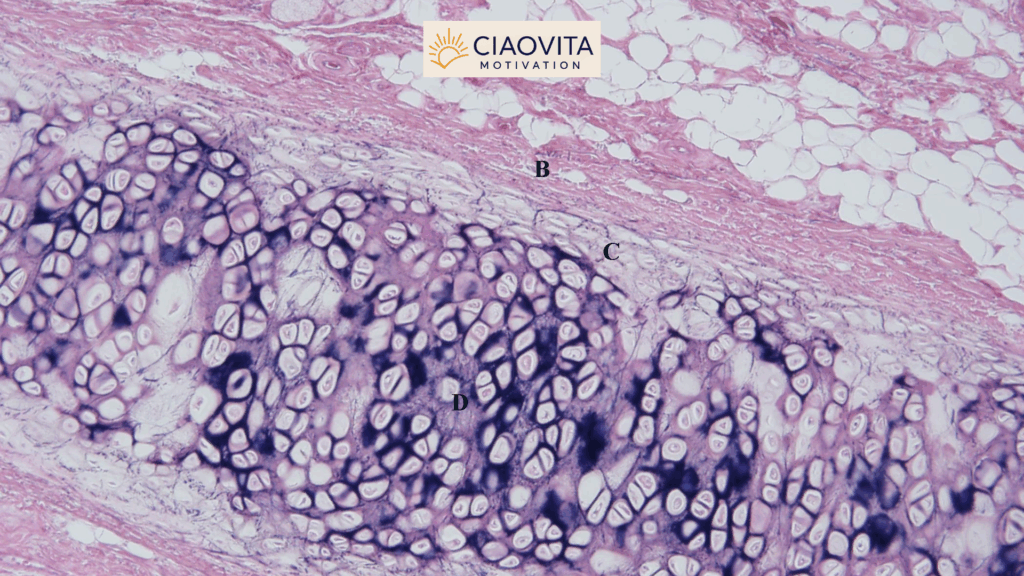
Research published in Nature Communications describes ultra-durable bioactive hydrogels for cartilage regeneration. These formulations incorporate biomimetic molecules that resist mechanical loading while promoting tissue repair. Histological analysis confirms new cartilage formation with proper proteoglycan content as indicated by toluidine blue and Safranin O staining.
Successful neo-proteoglycan designs include:
- BPG10 – Aggrecan mimetic using polyacryloyl chloride backbone with chondroitin sulfate chains. Absorbs 50% more water than natural aggrecan with longer half-life.
- mAGC – Peptidoglycan mimetic with HA-binding peptides. Stimulates type II collagen synthesis and increases compressive strength by 78% in cartilage constructs.
- mLUB15 – Lubricin biomimetic with dual-attachment peptides. Provides excellent boundary lubrication while resisting enzymatic degradation.
- Collaggrecan – Combines collagen structural benefits with chondroitin sulfate water-binding properties. Promotes mesenchymal stem cell differentiation into cartilage-producing cells.
Studies from Northwestern University published in Proceedings of the National Academy of Sciences demonstrate that bioactive materials combining biomimetic peptides with TGF-β1 binding domains successfully regenerate high-quality cartilage. Within six months treated joints show new cartilage containing natural biopolymers (collagen II and proteoglycans) enabling pain-free mechanical resilience.
The high negative charge density of neo-proteoglycans may provide unexpected benefits beyond structural support. Glycosaminoglycans enhance inhibitory activity of natural protease inhibitors in tissues. By binding inhibitors like antithrombin-III and tissue factor pathway inhibitor these molecules amplify protective effects against degradative enzymes common in arthritic joints.
Small Leucine-Rich Proteoglycans in Osteoarthritis
Research published in Osteoarthritis and Cartilage explores roles of small leucine-rich proteoglycans (SLRPs) including decorin biglycan fibromodulin and lumican in joint disease. These molecules interact with collagens modulating fibril formation while binding cell surface receptors and growth factors to influence cellular functions.
Animal studies using SLRP-deficient mice reveal involvement in osteoarthritis pathogenesis through multiple mechanisms:
- Extracellular collagen network regulation – Decorin controls collagen fibril diameter and organization
- TGF-β signaling pathways – Decorin sequesters TGF-β modulating its activity during tissue remodeling
- Subchondral bone integrity – SLRPs influence bone changes underlying cartilage degeneration
- Innate immune inflammation – Biglycan interacts with toll-like receptors affecting inflammatory responses
Interestingly forced exercise-induced osteoarthritis becomes attenuated in mice lacking decorin. This occurs because increased TGF-β bioavailability in decorin-deficient cartilage alters biomechanical properties and tissue responses to loading. These findings suggest targeting SLRP function may offer new therapeutic modalities for osteoarthritis through controlling the TGF-β-ECM system.
Monitoring SLRP fragmentation also represents a promising biomarker strategy. Western blot analysis detecting decorin and fibromodulin fragments specifically identifies patients with active cartilage degradation. These markers appear before structural changes become visible on standard imaging enabling earlier intervention.
Current Treatment Landscape and Future Directions
Comprehensive reviews published in Experimental & Molecular Medicine and npj Regenerative Medicine outline the current treatment landscape while highlighting emerging approaches. Traditional treatments like NSAIDs provide symptom relief without halting disease progression. Emerging strategies focus on regenerative medicine combining stem cells gene therapy and innovative biomaterials.
Current approved cartilage products include:
- Autologous chondrocyte implantation (MACI in US JACC in Japan)
- Matrix-associated techniques (Spherox Novocart 3D in Europe)
- Allogeneic stem cell products (Cartistem in South Korea for moderate OA)
However these products typically treat only focal cartilage defects not widespread osteoarthritis. Most require autologous cells introducing practical challenges including harvest site morbidity multiple surgeries and product inconsistencies. Additionally no approved products demonstrate complete long-term restoration of joint function.
Recent advances in circadian biology reveal that chondrocytes exhibit circadian rhythms regulating cartilage metabolism. Gene therapy approaches targeting circadian clock genes combined with biomaterial delivery systems may create novel therapies restoring normal metabolic patterns while protecting against inflammation-mediated degradation.
Emerging therapeutic strategies include:
- Senolytic treatments – Removing senescent chondrocytes that accumulate around cartilage lesions
- Injectable biomaterials – Photo-polymerized or chemically cross-linked scaffolds for minimally invasive delivery
- Exosome-based therapy – MSC-derived extracellular vesicles promoting cartilage regeneration without cell transplantation
- Gene editing – CRISPR approaches modifying chondrocyte metabolism to resist degradation
A 2025 review in Cell Regeneration emphasizes that cartilage consists primarily of water (65-80%) collagen fibers (10-20%) and proteoglycans (10-15%). Aggrecan represents the most abundant proteoglycan essential for maintaining structure and function. High presence of chondrogenic markers (SOX9 COL2 aggrecan) associates with high-quality articular cartilage regeneration while fibrocartilage markers (COL1A1 COL10A1) should remain low.
Practical Implications and Recommendations
The accumulated evidence from meta-analyses systematic reviews and clinical trials provides clear guidance for preserving joint health:
Early intervention proves critical. Treating joints before severe cartilage loss occurs offers genuine opportunities to preserve tissue and maintain function. Waiting until complete degeneration eliminates most therapeutic options except joint replacement surgery.
Hyaluronic acid therapy demonstrates consistent benefits when applied appropriately. High molecular weight formulations work best for early to moderate osteoarthritis. Combination approaches with PRP or growth factors may enhance outcomes though require further validation.
Biomarkers enable earlier detection. Measuring aggrecan degradation products (ARGS neoepitope) lubricin levels and SLRP fragments in serum or synovial fluid identifies patients with active cartilage breakdown before structural changes become irreversible on imaging.
Biomimetic proteoglycans represent promising tools. Neo-proteoglycans like BPG10 and mAGC demonstrate that simplified synthetic versions can match or exceed natural molecule performance. These materials integrate into tissue engineering scaffolds supporting cartilage regeneration.
Whole-joint approaches likely work better than targeting cartilage alone. Osteoarthritis affects menisci synovial membrane subchondral bone and ligaments. Comprehensive therapies addressing multiple joint tissues simultaneously may prove more effective than isolated cartilage treatments.
If you experience joint pain or stiffness discuss evaluation and early intervention options with your healthcare provider. Modern imaging techniques can detect cartilage changes before they become irreversible. The scientific evidence clearly demonstrates that early treatment preserves joint function for decades longer than waiting for symptoms to worsen.
Conclusion
Cartilage proteoglycans represent sophisticated molecular machines evolved over millions of years to protect joints from mechanical damage while coordinating complex repair processes. These molecules provide structural support regulate water content communicate with cells and maintain tissue homeostasis.
Understanding proteoglycan biology transformed how scientists view cartilage from inert cushioning to dynamic responsive tissue. This knowledge creates genuine opportunities for preventing and treating osteoarthritis through targeted interventions.
The evidence from comprehensive reviews and meta-analyses confirms that hyaluronic acid therapy provides consistent benefits particularly when applied early before severe cartilage loss occurs. Enhanced formulations combining hyaluronic acid with growth factors biomimetic molecules or therapeutic cells show promise for even greater efficacy.
Biomimetic proteoglycans demonstrate that simplified synthetic versions can match or exceed natural molecule performance. BPG10 mAGC and mLUB15 resist enzymatic breakdown while integrating into tissue engineering scaffolds. Combined with stem cell therapy and targeted growth factor delivery these approaches enable cartilage regeneration previously thought impossible.
The key message remains timing. Early intervention when cartilage shows initial damage but retains repair capacity offers the best chance for preserving joint function. Better biomarkers and improved imaging techniques now enable detection before changes become irreversible.
The science continues advancing rapidly as researchers combine multiple approaches into comprehensive therapies addressing different aspects of joint health simultaneously. Today’s research on proteoglycans hyaluronic acid and biomimetic molecules builds the foundation for tomorrow’s treatments that may fundamentally change osteoarthritis outcomes.
References
- Alcaide-Ruggiero L, Cugat R, Domínguez JM. Proteoglycans in Articular Cartilage and Their Contribution to Chondral Injury and Repair Mechanisms. Int J Mol Sci. 2023;24(13):10824.
- Roughley PJ. The role of aggrecan in normal and osteoarthritic cartilage. J Exp Orthop. 2015;2(1):1.
- Van den Berg WB. Osteoarthritis year 2010 in review: pathomechanisms. Osteoarthritis Cartilage. 2011;19(4):338-41.
- Mehana ES, Khafaga AF, El-Blehi SS. The role of matrix metalloproteinases in osteoarthritis pathogenesis. Life Sci. 2019;234:116786.
- Larsson E, Erlandsson Harris H, Larsson A, et al. Corticosteroid treatment of experimental arthritis retards cartilage destruction as determined by histology and serum COMP. Rheumatology. 2004;43(4):428-34.
- Scanzello CR, Goldring SR. The role of synovitis in osteoarthritis pathogenesis. Bone. 2012;51(2):249-57.
- Roughley PJ, Mort JS. The role of aggrecan in normal and osteoarthritic cartilage. J Exp Orthop. 2015;2(1):15.
- Kwon H, Brown WE, Lee CA, et al. Surgical and tissue engineering strategies for articular cartilage and meniscus repair. Nat Rev Rheumatol. 2019;15(9):550-70.
© 2025 Alice & Marcus Guimarães. All rights reserved.This site is proudly created with WordPress.